
Scotland County Divorce Decree
Scotland County divorce decree records can be found through the Circuit Clerk's office in Memphis, Missouri. The clerk keeps all dissolution of marriage files for this small northeast Missouri county. Whether you need a copy for your own records or you are searching for case details from a past divorce, the clerk's office is the place to go. You can also use the state's online court search tool to check basic case data. This page covers the main ways to find and request Scotland County divorce records, what those records contain, and how the process works at both the local and state level.
Quick Facts
Scotland County Divorce Records
The Scotland County Circuit Clerk holds all divorce records filed in this county. That includes the original petition, the final decree, and any court orders tied to the case. These files are public records under Missouri law. Anyone can ask to see them. You do not need to be one of the parties to get basic case data, though some sealed items like financial affidavits may be off limits.
A divorce decree is the court order that ends a marriage. It lists both spouses by name, gives the case number, and states the date the judge signed it. The decree also covers property division, child custody if kids are part of the case, and spousal support terms. Missouri uses a no-fault system under RSMo Chapter 452, so the most common ground is that the marriage is irretrievably broken. The Scotland County courthouse at 117 South Market in Memphis is where all of this gets filed and stored. You can call the clerk at (660) 465-7024 to ask about a specific case or to find out what you need to bring when you visit.
Mail requests are also accepted. Send a written request with the names of both parties and the date of the divorce. Include a self-addressed stamped envelope and any required fees. The clerk will send back copies once they find the record.
Searching Divorce Decree Records Online
Missouri runs a free system called Case.net that covers all circuit courts in the state. You can search Scotland County divorce cases by name, case number, or filing date. The results show who is involved in the case, what type of case it is, hearing dates, and the current status. This is a good way to check if a divorce was filed here or to get a case number before you request copies from the clerk.
Keep in mind that Case.net does not show the full text of the divorce decree. It gives you enough to confirm a case exists and track its progress. If you need the actual document with all the terms and conditions, you still have to go through the circuit clerk. The online tool is a starting point. It saves you a trip to the courthouse when all you need is a quick check.
The Missouri state portal also has information about where to get divorce records and what types of documents are available at the state and county levels.
Note: Case.net results are for reference only and should not be treated as certified copies of court records.
Filing for Divorce in Scotland County
To file for divorce in Scotland County, one spouse must have lived in Missouri for at least 90 days. The process starts with a petition for dissolution of marriage filed at the circuit court in Memphis. Missouri law requires a 30-day waiting period after the petition is filed before the court can grant the divorce. This waiting period is set by RSMo 452.320 and applies to every case in the state.
The petition must state that the marriage is irretrievably broken. If both parties agree on all terms, the case can move forward as an uncontested divorce, which is usually faster and less expensive. If there are disagreements about custody, property, or support, the case becomes contested and may take longer to resolve. The judge makes the final call on any terms the parties cannot agree on.
Filing fees apply. Contact the clerk at (660) 465-7024 for the current amount. If you cannot afford the fee, you may be able to file a motion to proceed without payment. The clerk can tell you more about that option.
State Divorce Records Through Vital Records
The Missouri Department of Health and Senior Services keeps certified statements relating to divorce. These are not the same as a full divorce decree. A certified statement only lists the names of both spouses, the date of the divorce, and the county where it was recorded. It does not include custody terms, property split details, or support orders.
Each certified statement costs $15.00. You can order one by mail, in person at 930 Wildwood Drive in Jefferson City, or through VitalChek online. The state has kept divorce records since July 1, 1948. For anything before that date, the county circuit clerk is the only source. If you are not sure which county handled the divorce, the state office can sometimes help you narrow it down through the certified statement system.
What a Scotland County Divorce Decree Shows
A divorce decree from Scotland County contains the full terms of the dissolution. It names both parties and gives the case number assigned by the court. The decree states the legal grounds, which in most Missouri cases is irretrievable breakdown of the marriage. If children are involved, the decree includes a parenting plan with custody arrangements, visitation schedules, and child support amounts.
The below screenshot shows the Missouri state portal page with guidance on marriage and divorce records in the state.
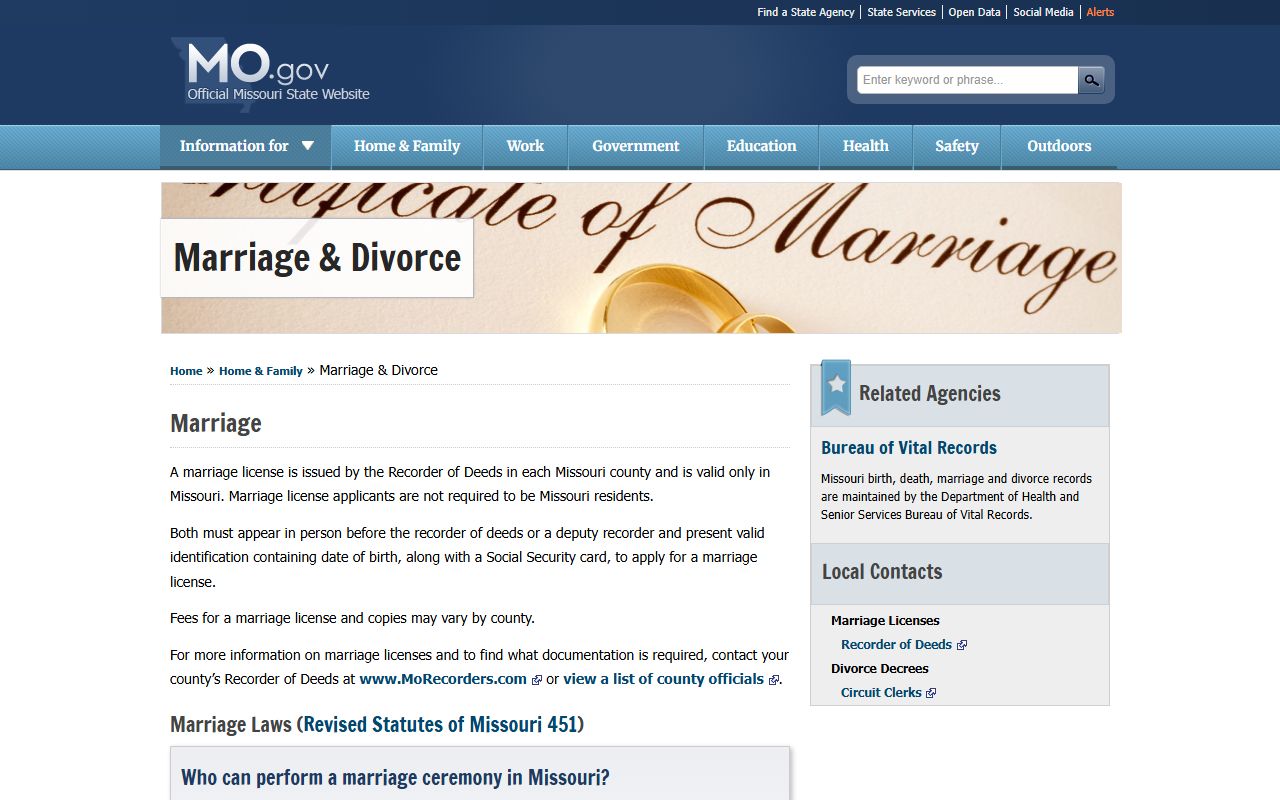
This state resource explains the difference between a certified statement from the health department and a full divorce decree from the circuit clerk. It is a helpful starting point if you are not sure which document you need.
Property division is another key part of the decree. The court splits assets and debts between the two spouses. Retirement accounts, real estate, vehicles, and personal property all get addressed. Spousal maintenance, if ordered, spells out the amount and how long it lasts. Every decree is different because every case has its own facts.
Nearby Counties
If the divorce was filed in a neighboring county, you may need to reach out to that county's circuit clerk. Counties near Scotland include: