
Missouri Divorce Decree Records
A Missouri divorce decree is the final court order that ends a marriage in this state. County Circuit Court Clerks hold the full case files for every dissolution filed in their court, and the Missouri Bureau of Vital Records keeps divorce verification statements going back to July 1948. You can search for a divorce decree online through Case.net, request one by mail from the clerk, or visit a courthouse in person. Missouri has 114 counties plus the City of St. Louis, each with its own Circuit Clerk who stores these records. This page covers the ways to find and get a copy of a Missouri divorce decree, what the document contains, the fees you can expect, and where to look based on your county.
Missouri Divorce Decree Quick Facts
Where to Find a Missouri Divorce Decree
Missouri has two main sources for a divorce decree. The Circuit Court Clerk in each county keeps the full case file for every dissolution proceeding filed in that court. These files hold the original petition for dissolution of marriage, the response, any separation agreement, and the final divorce decree signed by the judge. The Circuit Clerk stores all of this at the courthouse. You can go in person or search some case data through Missouri Case.net, the state's online court records system.
The Missouri Bureau of Vital Records keeps divorce verification statements. These are not the same as a full divorce decree. A verification statement has the names of both spouses, the date the divorce was granted, and the county where it took place. The Bureau has kept these since July 1948. You can order one by mail or through an online vendor. The cost is $15 for the first search.
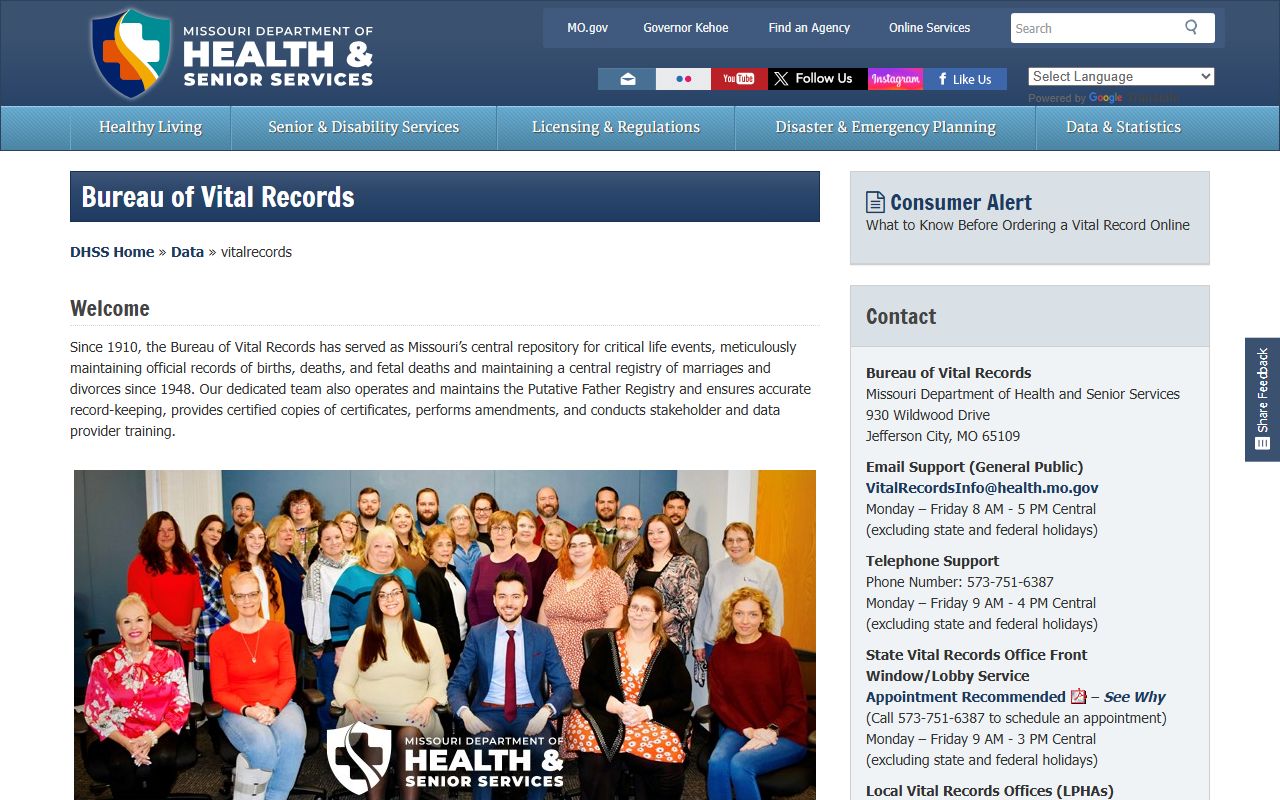
The key difference is simple. A divorce decree from the Circuit Clerk has all the details of the case. A verification statement from the Bureau only confirms the divorce happened. If you need property division terms, custody arrangements, or support orders, you need the actual decree from the county court.
Note: The Bureau of Vital Records can be reached at 573-751-6387 or by email at VitalRecordsInfo@health.mo.gov for questions about divorce verification statements.
How to Search for a Divorce Decree in Missouri
Missouri Case.net is the fastest way to look up divorce case information. It is free. The system covers all 46 judicial circuits across the state. You can search by name, case number, or filing date. Case.net shows docket entries, hearing dates, and case status. It does not show the actual divorce decree document, but it tells you whether a case exists and where it was filed. Visit courts.mo.gov/casenet to start a search.
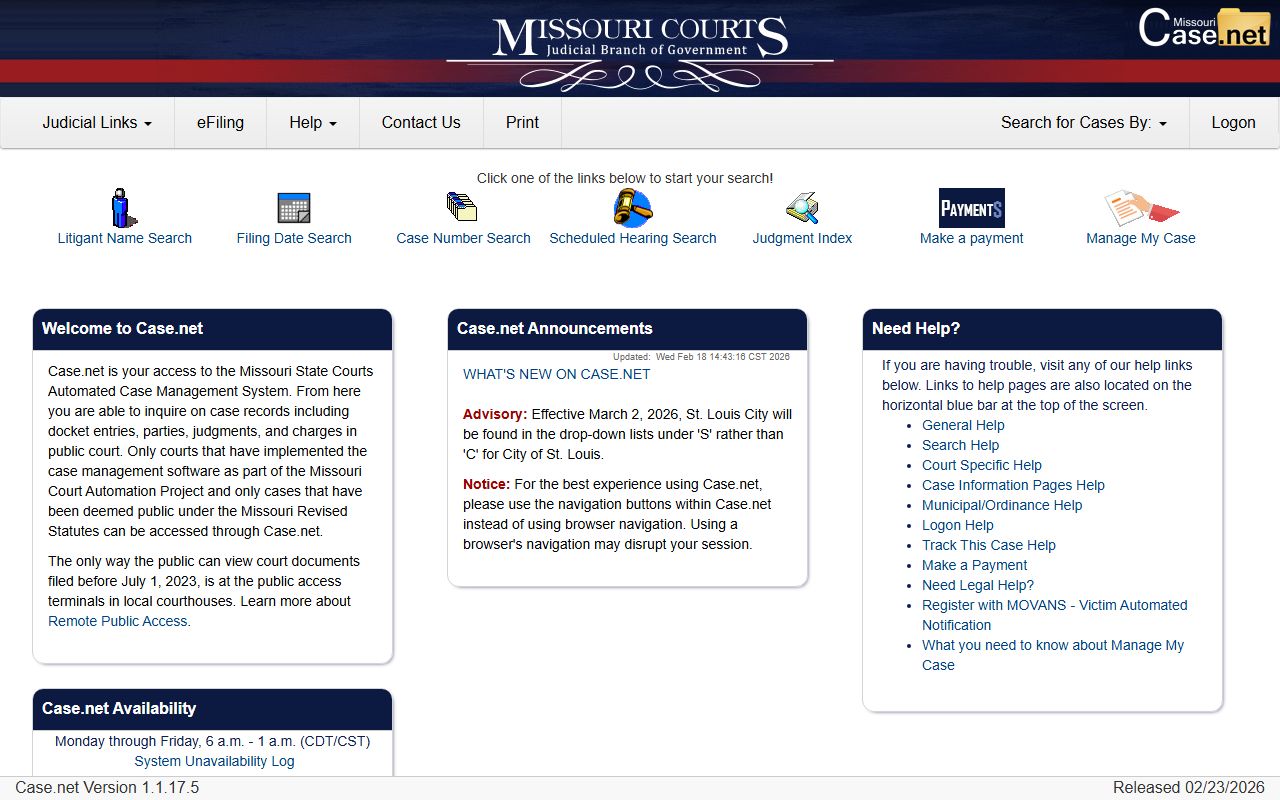
To find a divorce decree on Case.net, you need:
- The full name of at least one party
- The county or circuit where the case was filed
- An approximate date or year of the filing
You can also search in person. Go to the Circuit Clerk's office in the county where the divorce was filed. Staff there can look up the case and pull the file. Most clerks charge a per-page fee for plain copies. Certified copies cost more. Some clerks also take mail requests. Call first to ask what information they need and how to pay.
For older cases, the Missouri State Archives holds historical court records. Their Judicial Records Index lets you search by name, county, and year. For divorce records filed before August 28, 2009, the final decree section is accessible, while other sections are sealed for 72 years after filing. The archives research room is open to in-person visitors, and staff can help with mail requests too.
What a Missouri Divorce Decree Contains
The divorce decree is the final court order in a dissolution case. A judge signs it after the parties reach a settlement or the court makes a ruling at trial. The decree says the marriage is dissolved. It also spells out custody arrangements, child support amounts, spousal maintenance, and how the couple's property and debts are split. This is the most complete divorce record you can get, and it comes from the Circuit Clerk in the county that heard the case.
A divorce verification statement from the Bureau of Vital Records is shorter. It just confirms a divorce took place. People sometimes use it when they need basic proof of a divorce for things like updating an ID or getting remarried. Under RSMo 193.085, the Bureau serves as the central repository for vital records in Missouri, and certified statements are issued on security paper with the state seal.
A typical Missouri divorce decree includes:
- Full legal names of both spouses
- Date and place of the marriage
- Date the petition was filed and case number
- Date the divorce decree was entered
- County and judicial circuit
- Terms of property and debt division
- Custody, visitation, and child support orders
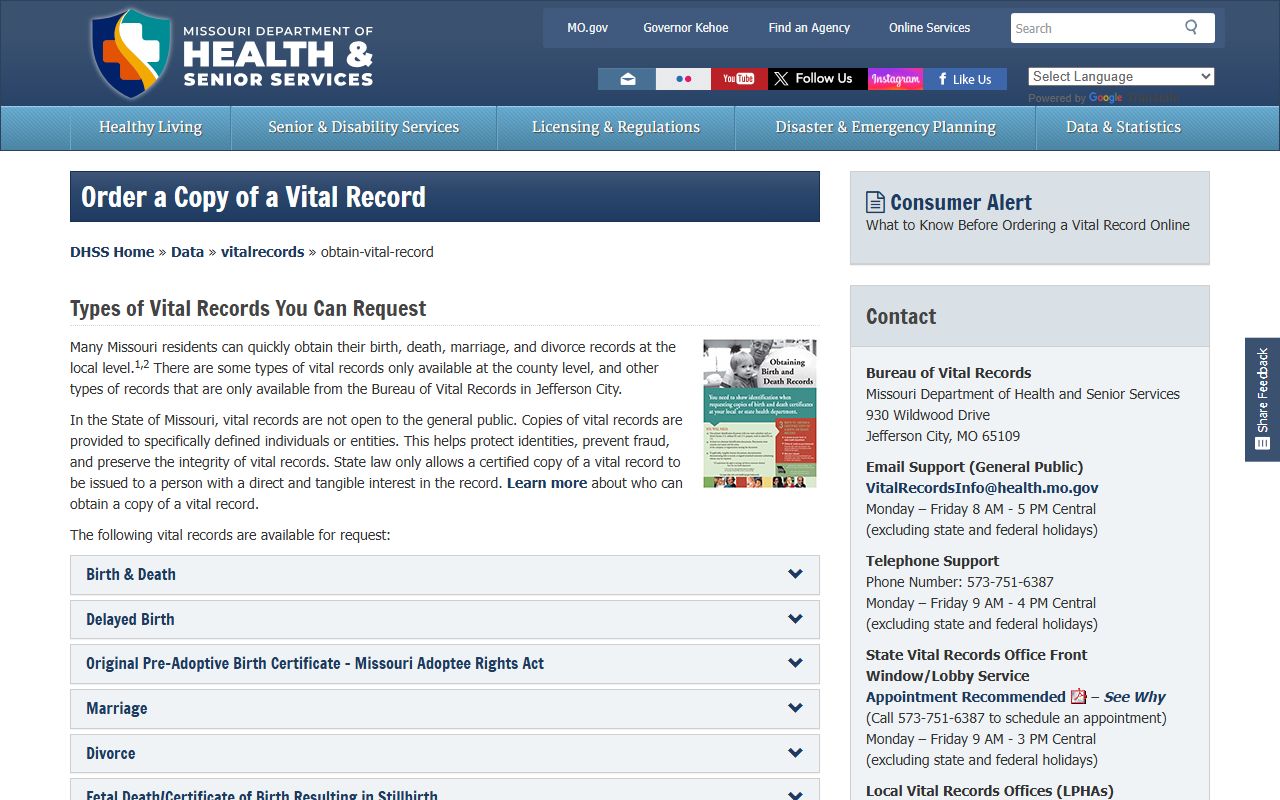
Court files may also hold motions, temporary orders, financial statements, and other papers filed during the case. You can get copies of any document in the case file from the Circuit Clerk.
Missouri Divorce Decree Laws and Filing Rules
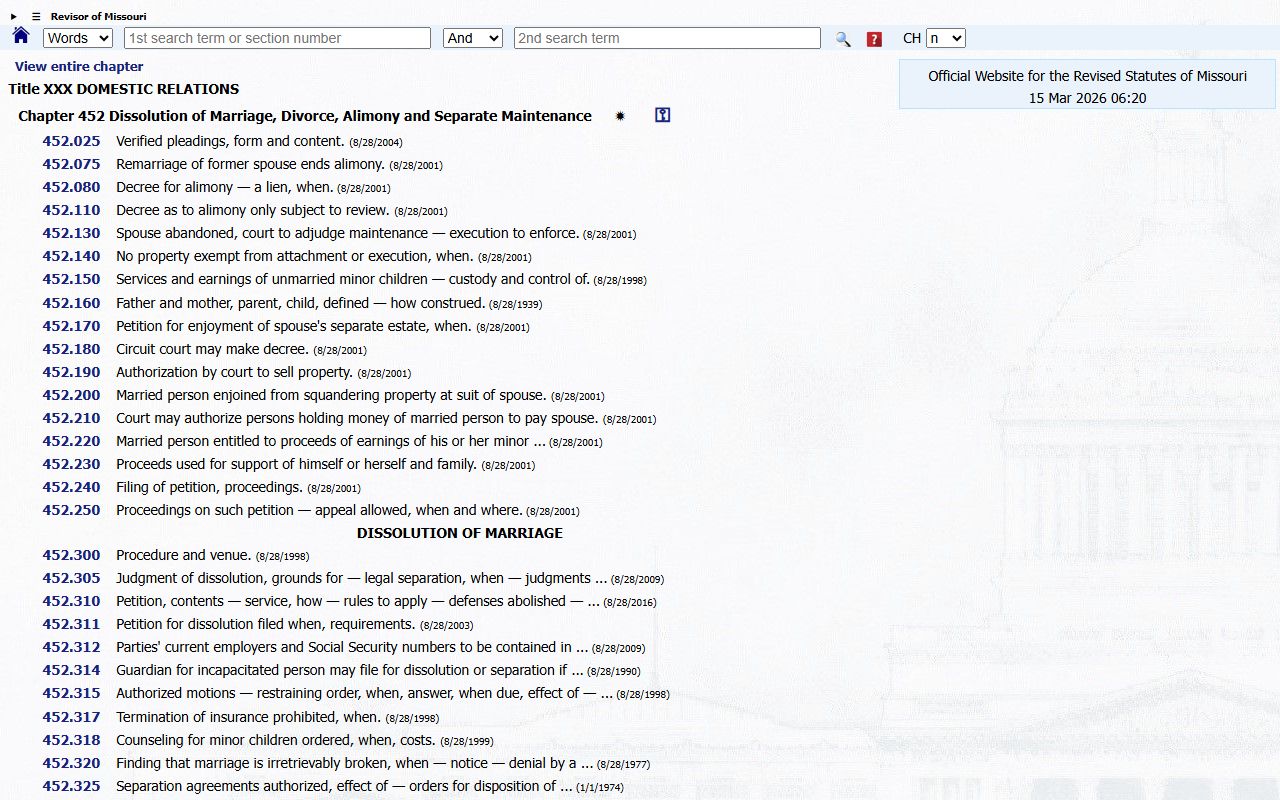
Missouri statutes set the rules for getting a dissolution of marriage. These laws shape the timeline and determine what goes into the final divorce decree. The key statutes are in Chapter 452 of the Missouri Revised Statutes.
Under RSMo 452.305, one spouse must have lived in Missouri for at least 90 days before filing. You file in the circuit court of the county where you or your spouse lives. The petition must state that you meet this rule.
Missouri is mostly a no-fault state. Under RSMo 452.320, the court must find that the marriage is "irretrievably broken" before it can grant a divorce decree. The same statute sets a 30-day wait after filing before the court can sign the decree. During that time, the judge can issue temporary orders for custody, support, or use of the home.
For property, Missouri uses equitable distribution. Under RSMo 452.330, the court divides assets in a way it finds fair. That does not always mean a 50-50 split. The judge looks at each spouse's financial situation, what each person contributed to the marriage, and other factors. All of these terms end up in the final divorce decree.
Under RSMo 452.375, custody decisions focus on the best interests of the child. Both parents must submit a parenting plan. The court can modify custody later if circumstances change, per RSMo 452.410. Every party not represented by an attorney must use forms approved by the Missouri Supreme Court when filing family law cases.
Divorce Decree Fees in Missouri
Fees vary by county and by what you need. The Bureau of Vital Records charges $15 for a divorce verification statement search. Ordering online through VitalChek adds a service fee on top of that. Mail requests take four to eight weeks to process.
Circuit Courts set their own fee schedules. Filing a new petition for dissolution typically costs between $100 and $225 across Missouri counties. Getting copies of an existing divorce decree from the clerk costs less. Most offices charge per page for plain copies. Certified copies run higher. In Butler County, for example, a divorce decree copy is $2.50 without attachments and $5.00 with attachments like a parenting plan. Greene County charges 25 cents per page for regular copies and $3 per document for certification.
If you can't afford the fee, you can ask the court for a waiver. File a Motion to Proceed In Forma Pauperis. Include documentation of your income and expenses. The judge decides whether to waive the fees.
Note: Fees change from time to time, so call the specific court or agency to check current costs before you send a request.
How to Get a Copy of a Divorce Decree
For the full divorce decree, contact the Circuit Clerk in the county where the case was filed. You can go in person, call, or send a mail request. Provide the names of both parties and the approximate date or case number. The clerk will pull the file and make copies. Bring a valid ID if you go in person. Some clerks accept payment by check, money order, or credit card. Others only take certain forms of payment, so call ahead.
For a divorce verification statement from the Bureau of Vital Records, mail your request to Bureau of Vital Records, P.O. Box 570, Jefferson City, MO 65102. Include the names of both spouses, the date of divorce, the county, and your $15 payment. You can also order by phone or online through VitalChek. In-person requests are taken at 930 Wildwood Drive, Jefferson City, MO 65109, by appointment.
The Missouri Association of Counties directory can help you find the Circuit Clerk's contact information for any county. Each county page lists the clerk's address, phone number, and in many cases an email. The association covers all 114 Missouri counties and the City of St. Louis.
Legal Help for Missouri Divorce Cases
Legal Services of Missouri offers free legal help to qualifying low-income residents. They handle family law matters like dissolution, custody, and protective orders. Call their intake line to find out if you qualify.
The Missouri Bar runs a Lawyer Referral Service. You can search for family law attorneys by location and practice area. They can connect you with someone who handles divorce decree cases in your county.
Missouri Legal Help has free self-help guides for people who want to handle their own dissolution. The Missouri Courts website has all the official forms you need to file, including the petition for dissolution, answer, and financial statement. These are the Supreme Court-approved forms that self-represented parties must use.
Are Missouri Divorce Decrees Public Records
Court records in Missouri are generally open to the public. The Missouri Sunshine Law (Chapter 610 RSMo) gives anyone the right to inspect and copy government records. This includes divorce decrees on file at the Circuit Clerk's office. You do not have to be a party to the case. You don't need to give a reason for your request.
Some information gets redacted from public copies. Social Security numbers, bank account numbers, and sensitive details about minor children are typically removed. A party can petition the court to seal records, but judges only grant that when there is a strong reason. Sealed divorce files are rare in Missouri.
Vital records are different. Under RSMo 193.245, certified copies of vital records (including divorce verification statements from the Bureau) are not open to the general public. They are restricted to people with a "direct and tangible interest" in the record, such as the parties to the divorce, immediate family members, or authorized legal representatives. Copies of vital records cannot be duplicated or reproduced per state law.
Browse Missouri Divorce Decree Records by County
Each Missouri county has its own Circuit Clerk who stores divorce decrees. Pick a county below to find local contact details and resources for that area.
Divorce Decree Records in Major Missouri Cities
City residents file for divorce at their county's Circuit Court. Select a city below to learn about getting a divorce decree in that area.